
British Championship
We organise the British Go Championship annually, for the title of British Go Champion for the winner and for the eight best players to earn qualifying points for the World Amateur Go Championship.
The Championship comprises a number of events culminating in a Title Match. It is played according to detailed rules, or as in the rules summary. We also have the history of rule changes.
These are the qualifiers for the Candidates' Tournament for the current qualifying year according to the qualifying rules.
We also have a British Championship History and a list of winners on the British Championship tournament page, with links to game records and year pages with game records.
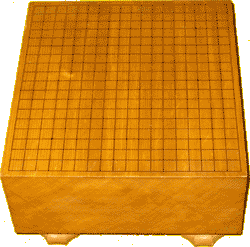
The trophy is the John Barrs Goban, shown here. It is a traditional Japanese Go board (a good quality tenmasa board).
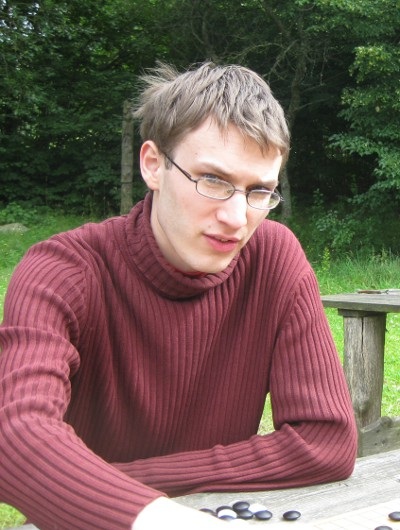
Current Champion Yaoling YangYaoling started to learn Go when he was 6. He became Chinese 5 dan at 11 and reached Fox Go 9d at 16. He came to the UK in 2020 to study MSc Statistics at UCL, and then a PhD at the University of Bristol from 2021. He has won a number of titles in Europe, including Paris International Tournament Champion (2023 & 2024), Prague Old Hunter's Cup Champion (2023), European Go Congress main tournament 2nd (2024), Weekend Tournament Champion (2022), London Open Champion (2021 & 2022), MSO Open Champion (2022), British Open Champion (2021), etc. |

|
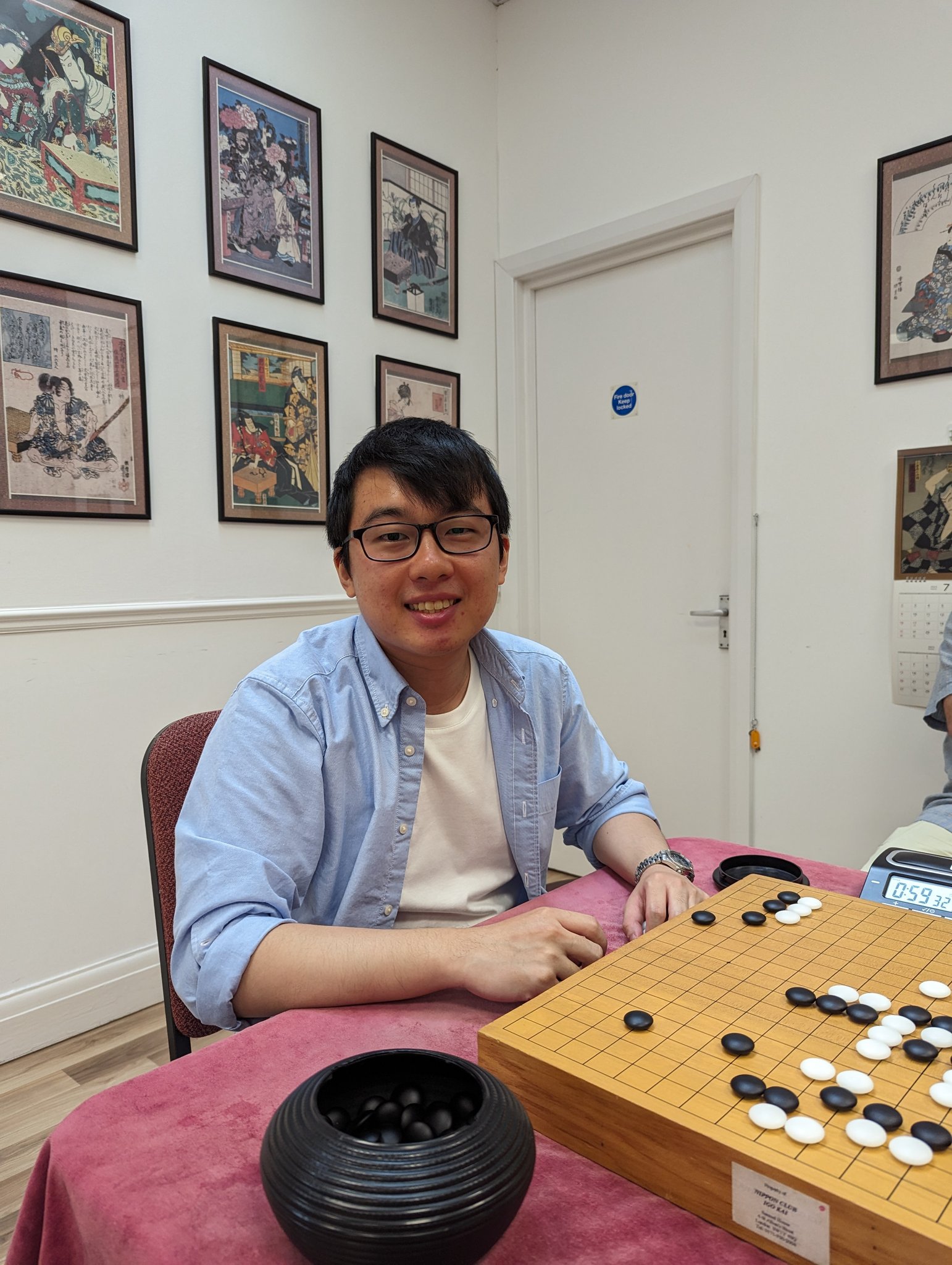
Previous Champion: Ho Yeung (Damen) WooIn 2012 Damen was part of the Hong Kong team at the World Mind Sports Games in Lille. After moving to the UK he played the London Open in 2017, ending second. In 2023, now based at the University of Nottingham, he was third in the British Small Board, second in the British Pair Go and first in the MSO GP online event, amongst other results, and in August 2023 was second at the Leksand Open in Sweden. |
|
Previous Champion: Gaoge WangGaoge started to study Go when she was 5 and was professionally trained in Beijing for 7 years. She came to the UK for undergraduate studies at Imperial College, in 2014, and is now doing a PhD degree at King's College. For achievements... Most of her achievements happened before she was 13, and there are only a few achieved in the UK: 1st 2022 Pair Go Championship; 3rd 2021 T Mark Hall Rapid Play; 1st 2018 MSO 19*19; 5th 2018 World Collegiate Weichi Championships (held in Cambridge). |

|
Previous Champions: |

|


2026

Candidates (British Championship) and Aspirants
Saturday 2nd–Monday 4th May. University of Warwick, Faculty of Arts Building FAB 1.11, Coventry CV4 7EQ. Two 6-round tournaments in parallel, with Fischer time 75 minutes + 20 seconds.
Candidates: Seeded Swiss. The primary stage of the British Championship, where the top two advance to the Title Match to compete for the title of 2026 British Go Champion and significant cash prizes (thanks to private sponsorship). Players meeting the qualification and eligibility requirements are cordially invited to enter – those with EGD country UK who have qualified should appear in the 2026 Qualifiers list, though the list does not reflect eligibility. If you believe you have qualified but are not listed, please contact tournament-chair AT britgo.org.
Aspirants: McMahon. For players rated under 1900 to enjoy playing with relaxed time controls and ample time for reviews. Rating is at time of entry: Aspirants who later qualify for Candidates will be moved to Candidates if eligible; otherwise, they can still play Aspirants even if their rating exceeds 1900.
A social meal will be held at the on-campus buffet restaurant on Saturday evening.
A
BC
More Info
Entry Form
Entries List
Entries by Tournament
2025
The 2025 Candidates' Tournament took place at Leicester Bridge Club over the early May Bank Holiday weekend, with Yaoling Yang and Lucretiu Calota coming top two.
The match started on Saturday 31st May at London Go Centre.
- Yaoling Yang won the first game by 12.5 points.
Game 1 - LGC YouTube live stream – BGA YouTube commentary - Yaoling Yang won the second game by default.
Yaoling Yang remains British Champion.
2024
The 2024 Candidates' Tournament took place at Leicester Bridge Club over the early May Bank Holiday weekend, with Ho Yeung Woo (Damen) and Yaoling Yang coming top two.
The best of three title match was played on Saturday 14th and Sunday 15th September at a private venue (Brent Cutts' house) in Nottingham. News Report
- Yaoling Yang won the first game by 0.5 point.
Game 1 OGS link
Game One with comments - Yaoling Yang won the second game by resignation.
Game 2 OGS link
Game Two with comments
2023
The 2023 Candidates' Tournament was held in Milton Keynes over the Spring holiday. Bruno Poltrinieri and Ho Yeung Woo will be playing a match for the title, as they were placed first and second.
The best of three title match was on Saturday 26th, Sunday 27th and Monday 28th August (the third game being needed) at the London Go Centre, Dalling Rd, London W6 0JD.
- Ho Yeung Woo won the first game by resignation.
Game One Sgf
LGC YouTube stream - Bruno Poltronieri won the second game by 6.5.
Game Two Sgf
LGC YouTube stream - Ho Yeung Woo won the final game by resignation.
Game Three Sgf
LGC YouTube stream
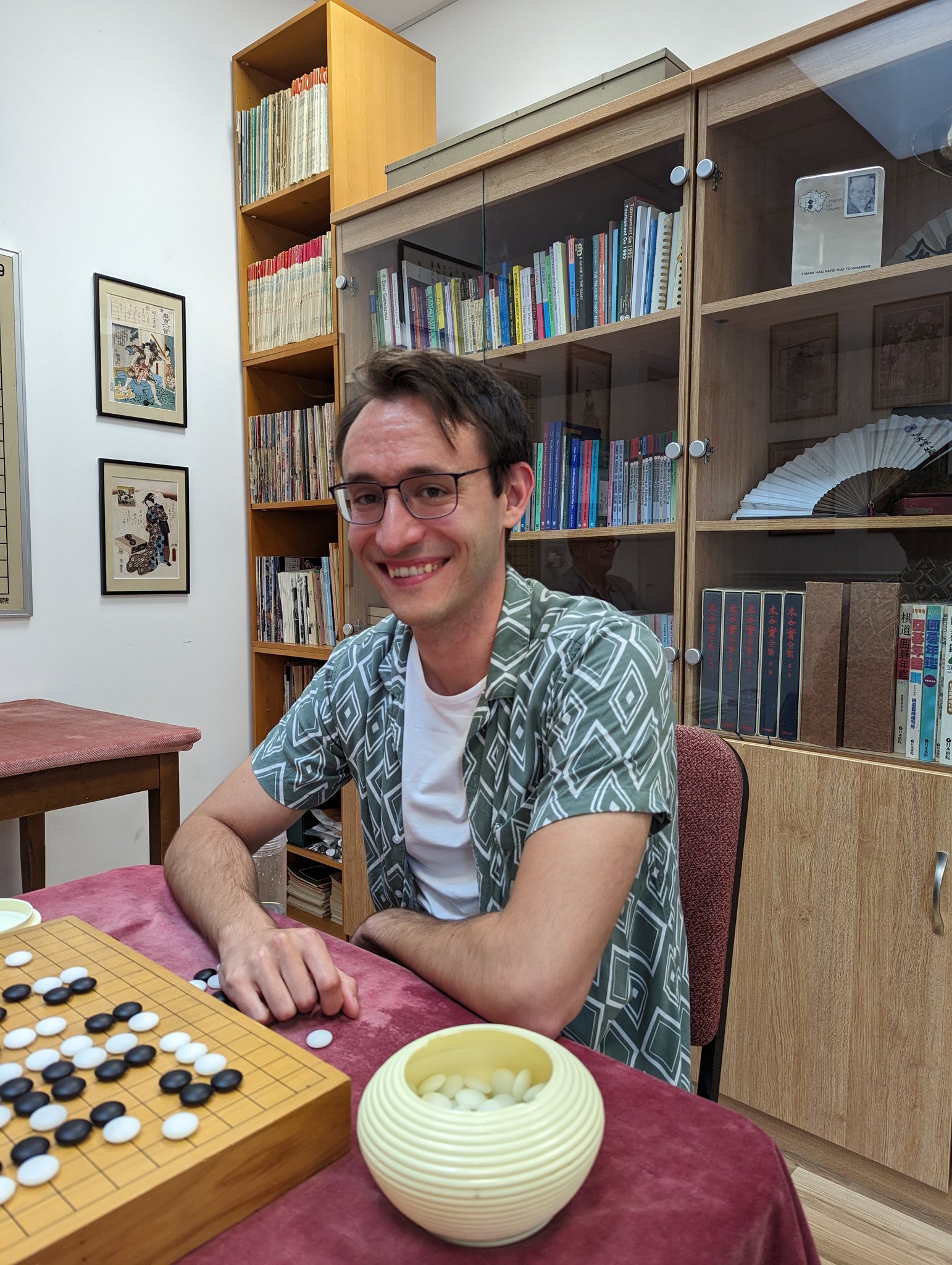
2023 runner up Bruno Poltronieri
2022
For 2022 the qualification criteria were amended. Even if players did not appear on the Qualifiers 2022 list, players may still have qualified under the amended rules.
The 2022 Candidates' Tournament was held in Letchworth Garden City over the Jubilee holiday. Gaoge Wang and Bruno Poltrinieri are playing a best of three match for the title, as they were placed first and second.
- Game 1: Saturday 20th August at London Go Centre
Won by Gaoge Wang (W) by 2.5
Game One with Matthew's analysis
LGC YouTube stream - Game 2: Saturday 21st August at London Go Centre
Won by Gaoge Wang (B) by 3.5
Game Two with Matthew's analysis
LGC YouTube stream
So Gaoge becomes first female British Go Champion!
2020-2021
The 2020 British Championship started in April 2019. All those who played in tournaments between April 2019 and March 2020 and ended with an EGF rating of 1900 or higher are shown in the Qualifiers2020 page. Note: This list contains players who may not be members or who do not have the required British nationality or residency requirements. The 2020 Championship was eventually cancelled due to the Coronovirus pandemic.
Those who played in the much reduced 2021 season from April 2020 to March 2021 are shown in the Qualifiers2021 page. It was hoped that we could hold a Candidates' Tournament post-Covid, but this proved not to be feasible and it was decided that the British Open held in October 2021 would be the Championship selector.
The top two British players from this, Daniel Hu (5d) and Bruno Poltronieri (3d), therefore played in the 2021 title match on Saturday 27th November 2021 as a best-of-one game at a private venue in Cambridge. A live online relay from 10:30 and commentary by Andrew Simons in a clone of the game was provided on KGS.
- Game: Saturday 27th November
Won by Daniel Hu (B) by 7.5
Game Relay raw record including unmoderated comments.
2019
The 2019 British Championship started in April 2018. All those who played in tournaments between April 2018 and March 2019 and ended with an EGF rating of 1900 or higher qualified. Note: This list contains players who may not be members or do not have the required British nationality or residency requirements. The qualifiers were able to play in the Candidates' Tournament from Saturday 4th to Monday 6th May at The Settlement 229 Nevells Road, Letchworth Garden City, SG6 4UB. As the champion Sam Aitken is not defending the title, the best available seven players and the previous challenger went on to play in the Challenger's League between 25th May and 28th May 2019 at the London Go Centre in West London.
The top two players, Andrew Kay and Andrew Simons, played the title match:

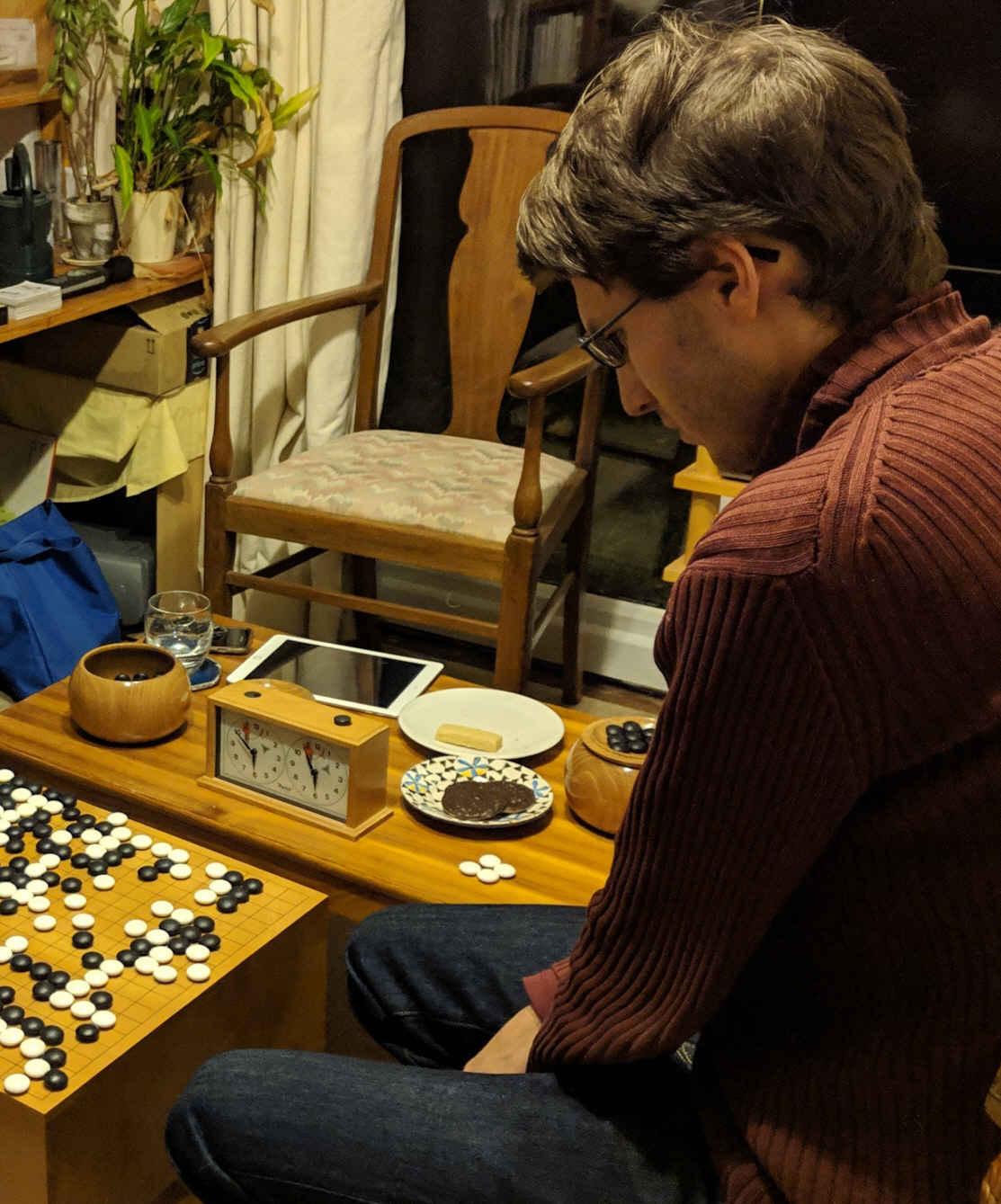
Game 1 in 2019's best-of-three title Match between Andrew Kay and Andrew Simons was on Saturday 5th October at a private venue in Nuneaton. Live online relay from 10:30 and commentary by Matthew Macfadyen in a clone of the game in the British or English Room on KGS.
Game 2 was on Saturday 9th November at a private venue in Cambridge. Live online relay from 10:30 and commentary by Matthew Macfadyen in a clone of the game in the British or English Room on KGS.
Game 3 was on Saturday 30th November at a private venue in Milton Keynes. Live online relay from 10:30 and commentary by Matthew Macfadyen in a clone of the game in the British or English Room on KGS.
- Game 1: Saturday 5th October
Won by Andrew Kay (W) by resignation
Game One Relay raw record including unmoderated comments.
Game One with Matthew's analysis and moderated comments
- Game 2: Saturday 9th November
Won by Andrew Simons (W) by 8.5
Game Two Relay raw record including unmoderated comments.
Game Two with Matthew's analysis
Andrew Simons' review - Game 3: Saturday 30th November
Won by Andrew Kay (W) by 18.5
Game Three Relay raw record including unmoderated comments.
Andrew Simon's review with Lizzie analysis
Andrew Kay won the match 2-1 and became British Champion again.
2018
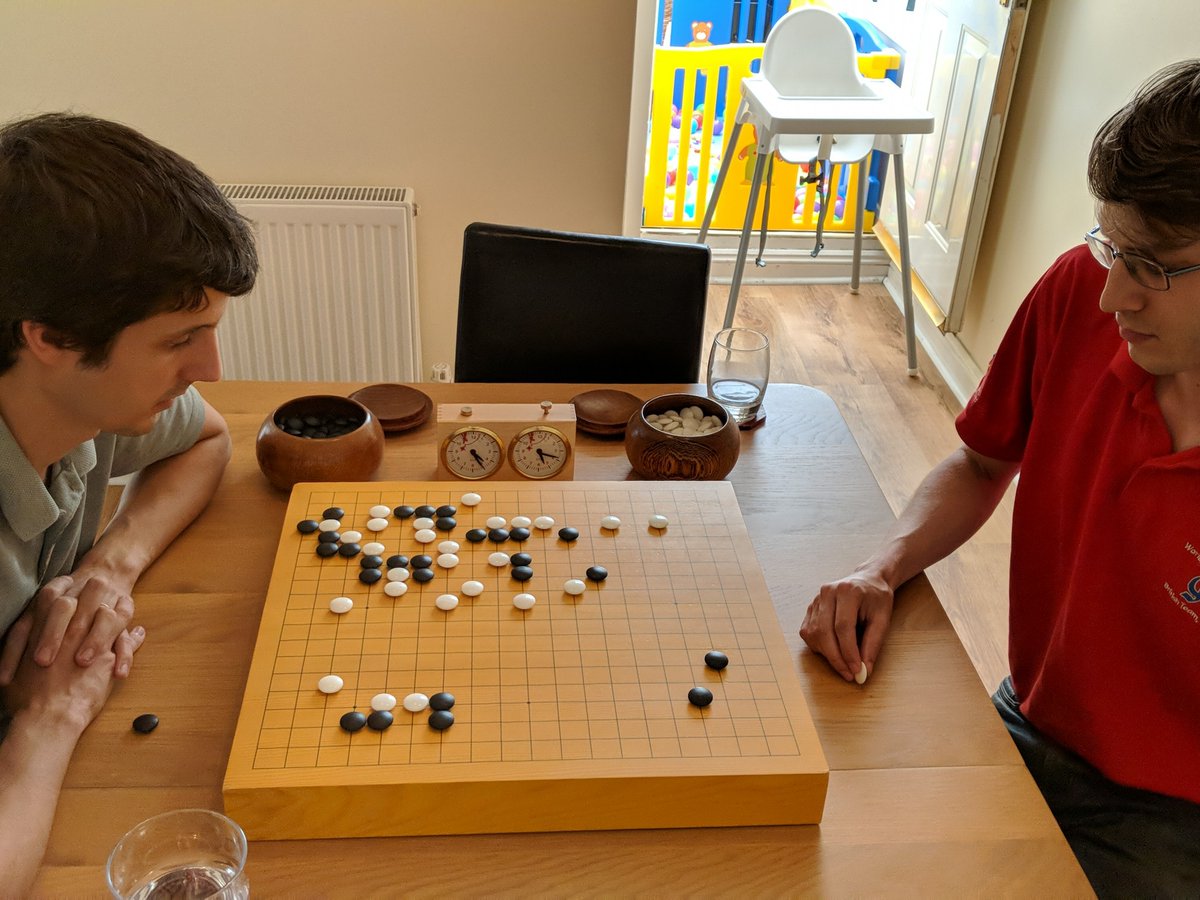
The 2018 British Championship started in April 2017. All those who played in tournaments between April 2017 and March 2018 and ended with an EGF rating of 1900 or higher qualified. Note: This list contains players who may not be members or do not have the required British nationality or residency requirements. The qualifiers were able to play in the Candidates' Tournament from 5th to 7th May 2018 and the best eight players went on to play in the Challenger's League between 26th May to 29th May 2018. Both events took place at the London Go Centre in West London. Note the reigning champion, Daniel Hu, did not play in the Challengers' League this time, as he was not defending the title. The top two from that then went on to play for the title, namely Sam Aitken and Andrew Simons.
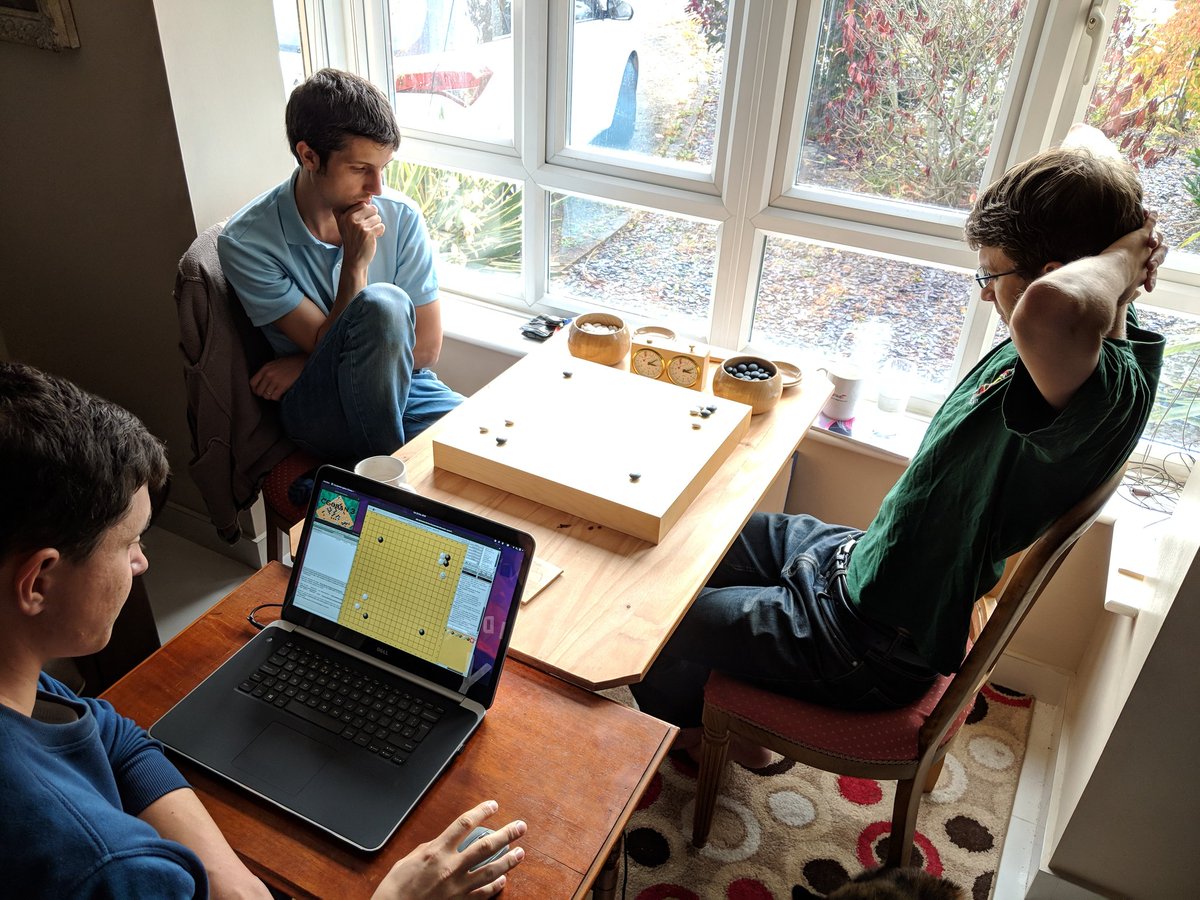
Game 1 in 2018's best-of-three title Match between Sam Aitken and Andrew Simons was on Saturday 21st July at a private venue in Northampton, with live online relay in the British Room on KGS and parallel live commentary by Matthew Macfadyen from 10:30. Andrew Simons has done a commentary on this game.
Game 2 - on Saturday 13th October at a private venue in Cambridge, with live online relay in the British Room on KGS and parallel live commentary in the English Room by Matthew Macfadyen from 10:30.
Game 3 - on Sunday 18th November in Cambridge, with live online relay in the British Room on KGS and parallel live audio commentary by Andrew Kay.
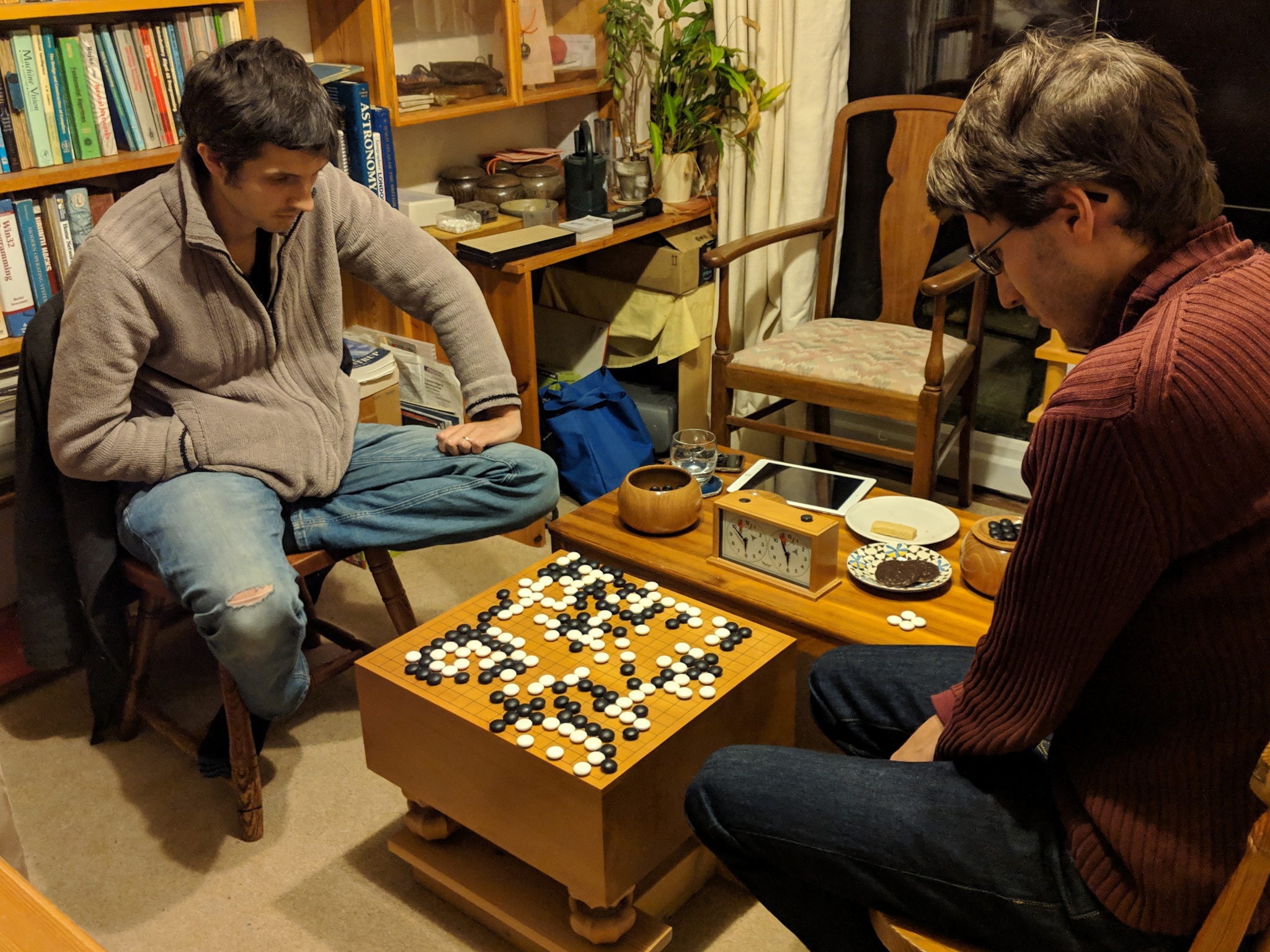
- Game 1: Saturday 21st July
Won by Andrew Simons (W) by 2.5.
Game One Relay raw record including unmoderated comments.
Game One with Matthew's comments
A commentary by Andrew Simons is available here. - Game 2: Saturday 13th October Won by Sam Aitken (W) by 4.5.
Game Two raw record including unmoderated comments.
Game Two with Matthew's comments
- Game 3: Sunday 18th November - Won by Sam Aitken (B) by 14.5
Game Three raw record including unmoderated comments.
Sam Aitken won the match 2-1 and became British Champion.
2017
The 2017 British Championship started in April 2016. All those who played in tournaments between April 2016 and March 2017 and ended with an EGF rating of 1900 or higher are on the list of qualifiers. Note: This list contains players who may not be members or do not have the required British nationality or residency requirements. The qualifiers were able to play in the Candidates' Tournament from 29th April to 1st May 2017 and the best players from this could join the reigning champion in the Challengers' League from 27th May to 30th May 2017. Both events were held in West London.
However Junnan Jiang declined to defend his title and so the top 8 players progressed to the Challengers' League - the top two to play for the title, namely Daniel Hu and Andrew Simons.
- Charles Hibbert vs. Andrew Kay
- Andrew Simons vs. Daniel Hu
- Charles Hibbert vs. Andrew Simons
- N/A
- Andrew Kay vs. Andrew Simons
- Andrew Simons vs. Tim Hunt
- Andrew Kay vs. Daniel Hu
Game 1 in 2017's best-of-three title Match between Daniel Hu and Andrew Simons was on Saturday 19th August at a private venue (Geoff Kaniuk's house) in Cambridge, with live online relay in the British Room on KGS and parallel live commentary by Matthew Macfadyen from 10:00.
Game 2 was on Saturday 30th September at a private venue (Simon Mader's flat) in Cambridge, with live online relay in the English Room on KGS.
- Game 1: Saturday 19th August
Won by Daniel Hu (w) by resignation.
Game One Relay raw record including unmoderated comments.
Game One Clone to move 68 Game One Clone from 69 with analysis by Matthew Macfadyen.
Game One with Daniel's comments
- Game 2: Saturday 30th September
Won by Daniel Hu (b) by 3.5 points.
Game Two Relay raw record including unmoderated comments.
Daniel Hu won the match 2-0 and became British Champion.
2016
The 2016 British Championship started in April 2015. All those who played in tournaments between April 2015 and March 2016 and ended with an EGF rating of 1900 or higher are on the list of qualifiers. Note: This list may contain players who are not our members or do not have the required British nationality or residency requirements. The qualifiers were able to play in the Candidates' Tournament in Letchworth from 30th April to 2nd May 2016. Results
The top six available players from the Candidates', plus the reigning champion (Andrew Simons) and Des Cann (who missed last year because of the World Amateur), took part in the Challengers League in London from 28th May to 31st May 2016. Junnan Jiang and Charles Hibbert finished with six wins each, meaning that no play-off game was required and the two of them would go on to play in the British Championship title match games. Andrew Simons, the reigning British Champion finished on 4 wins, and given that neither Junnan or Charles have competed for the title before a new champion was ensured for 2016. Results
Game 1 Saturday 20th August Charles Hibbert against Junnan Jiang, played at private address in Oxford. Live relay on KGS (with commentary by Matthew Macfadyen [RubberDuck]) from 10:30.
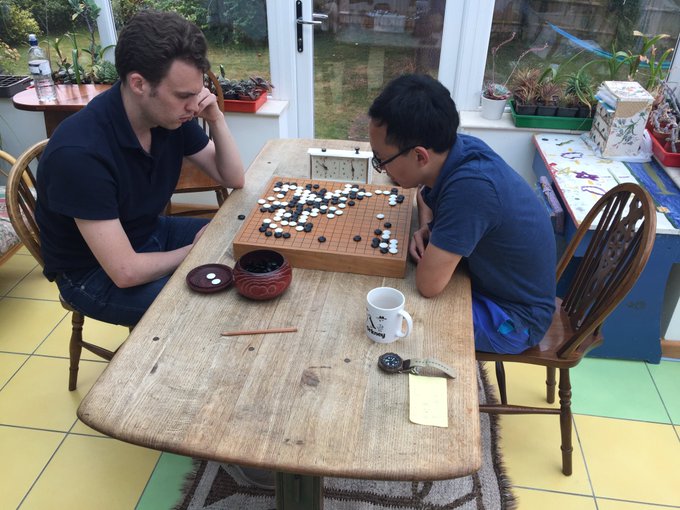
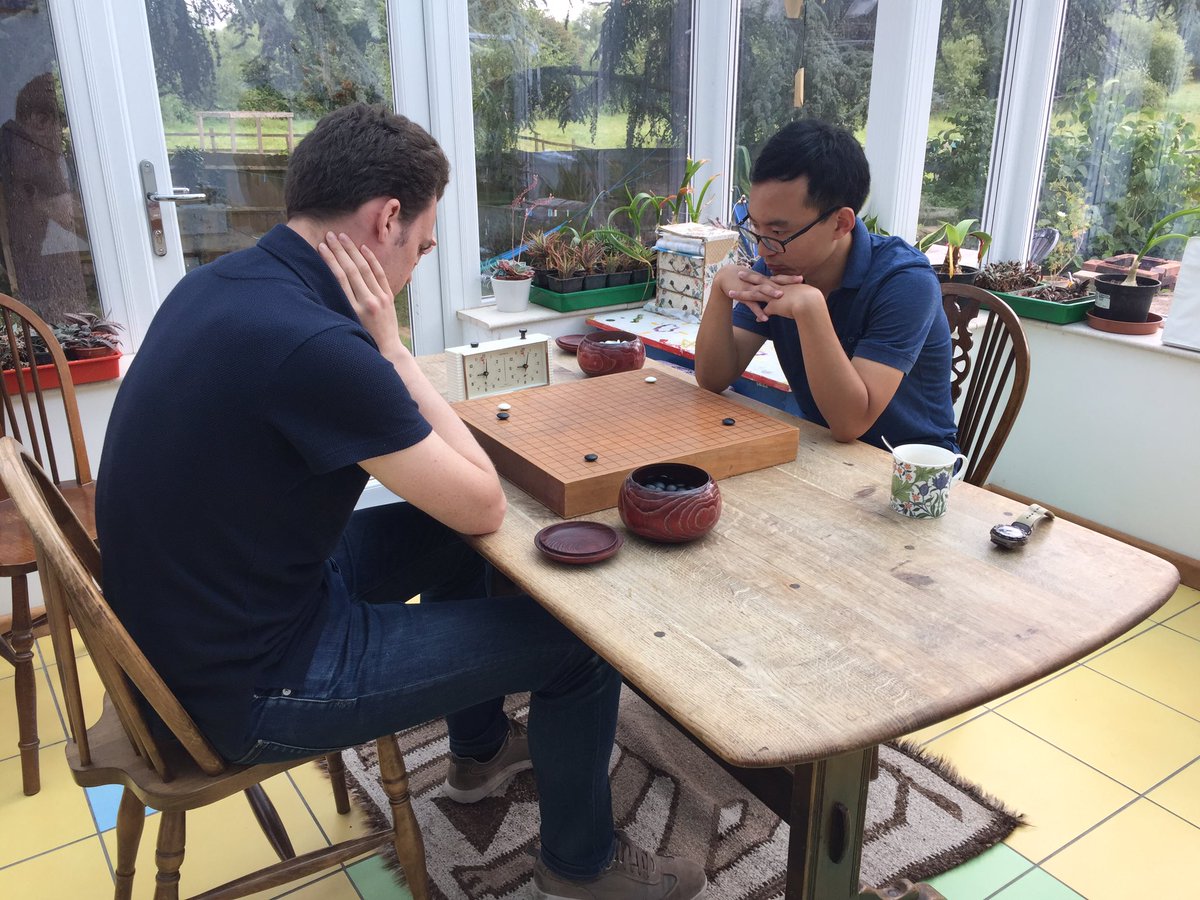
Game 2 Saturday 3rd December Junnan Jiang against Charles Hibbert, played at Young Chelsea Bridge Club, London. Live relay on OGS.
Game 3 Sunday 19th February Junnan Jiang against Charles Hibbert, played at Young Chelsea Bridge Club, London. Live relay on KGS with commentary by Matthew Macfadyen.
- Game 1: Saturday 20th August
Won by Charles Hibbert by resignation.
Game One Relay raw record including unmoderated comments.
Game One Clone with analysis by Matthew Macfadyen.
- Game 2: Saturday 3rd December
Won by Junnan Jiang by resignation.
Game Two Relay raw record including unmoderated comments and variations.
Game Two Edit comments and variations removed.
- Game 3: Sunday 29th February
Won by Junnan Jiang by 20.5.
Game Three Relay raw record including unmoderated comments.
Game Three Clone with analysis by Matthew Macfadyen
Junnan Jiang won the match 2-1 and became British Champion.
2015
2014
2013
2012
For previous years see British Championship tournament page or see the British Championship History.
If you have any comments, please email the webmaster on web-master AT britgo DOT org.